

Introduction to the learning management system
Learning Management System (LMS) is a shift in education that has crossed the boundaries of traditional classrooms, taking advantage of technology to reach learners around the world. It is a software platform that is used to manage, organize and provide courses or online training programs. It is a central point that allows teachers to create and organize the content, while learners can access materials, participate in activities, and track their progress from their own devices. This powerful tool has reshaped the way to present, manage and experiment with educational content.
The importance of the learning management system LMS In modern education
The importance of LMS has become particularly evident in recent years, with a rapid shift towards online and mixed learning models, which has accelerated due to the COVID-19 pandemic. Educational institutions and companies alike have resorted to LMS to ensure the continuity of learning and training, highlighting their critical role in modern education. This trend is particularly noticeable in the Arab Gulf states, where LMS is increasingly dependent in higher education institutions. Research indicates that factors such as technology familiarity, system complexity, and mobility difficulties affect the success of the implementation and use of LMS in this region.A Systematic Review on LMS Usage in Gulf Countries).
The role of MS Asia in the use of the learning management system LMS
One of the leading entities in leveraged LMS technology is MS Asia, a leading provider of educational services and human development in Malaysia and abroad. With its commitment to excellence and innovation, MS Asia offers a range of programs and courses that use advanced LMS technologies to provide high-quality education to learners in Malaysia, the Gulf countries and Asia.
Let’s explore the world of learning management systems, addressing its basic functions, benefits, and real-world applications. We will also examine how MS Asia integrates LMS into its shows to enhance the learning experience of its diverse audience.
Understanding the learning management system LMS
The learning management system is more than a digital repository of study materials; It is a comprehensive ecosystem that supports the entire educational process. From creating and presenting content to evaluation and reporting, LMS simplifies the educational functioning, making it more efficient and efficient.
The historical development of the learning management system LMS
The concept of LMS can be traced to the 1950s when the first computer-based training systems were developed. However, LMS did not start taking its current form until mid-1990s, with the advent of the Internet and web-based learning platforms. Over the years, LMS has evolved to include a wide range of features, including multimedia content, interactive tools, and advanced analytics, to meet the diverse needs of learners and educators.
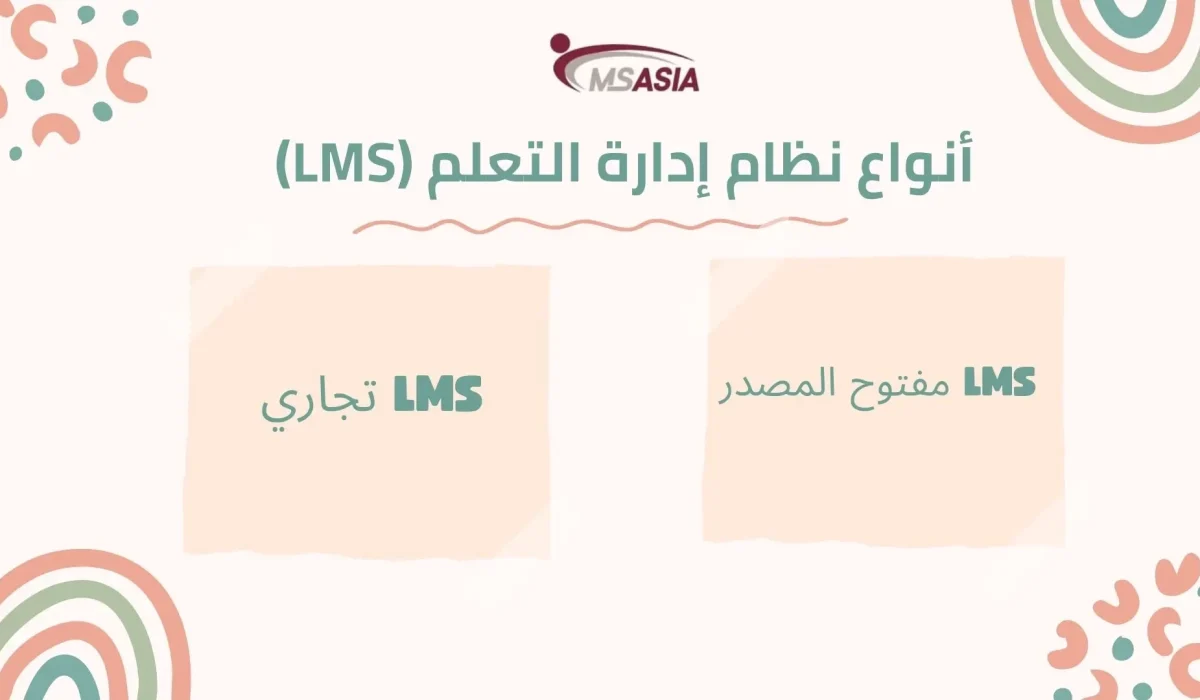
Types of learning management system LMS
LMS platforms can be classified into two main types: open source and commercial.
-
LMS Open Source: These platforms are available for free and can be customized to meet specific requirements. moodle An outstanding example, it is widely used in academic institutions for its flexibility and community support.
-
LMS Commercial: These are commercial products that offer organized support and training but may come with a license fee.. Blackboard AndCanvas Popular options in higher education, known for their strong features and reliability.
Each type has its advantages and challenges, and the choice between them depends on factors such as budget, technical expertise, and specific needs of the organization.
basic functions learning management system LMS
To fully understand LMS capabilities, it is necessary to understand its basic functions:
-
Content Management: LMS enables teachers to raise, organize and manage educational materials such as videos, documents, and tests. This ensures that all educational resources are readily available in one place.
-
User Management: The system enables the system to register and manage users, including students, teachers, and administrators, while defining specific roles and powers to access features and content.
-
E-Learning: LMS provides tools to provide interactive courses, including multimedia content, discussion forums, and collaborative projects, promoting an attractive learning environment.
-
Tracking and Evaluation: Through features such as progress tracking, score records, and analytics, LMS helps monitor learners’ performance and provide visions for improvement.
-
Integration: Many LMS platforms are integrated with other tools and services, such as video conference programs (such as Zoom), cloud storage (e.g. Google Drive), and student information systems, which enhance their functionality.
-
Personalization: LMS can be designed to reflect the specific brand and requirements of the organization, providing a customized learning experience.
Benefits of the Learning Management System LMS
LMS accreditation brings many benefits to both teachers and learners:
Save time and costs
By reducing the need for physical classrooms and printed materials, LMS reduces operational costs and saves time for both teachers and students. For example, using TalentLMSA training company can create an online course instead of organizing an in-person workshop, saving travel and accommodation costs.
flexible learning
Learners can access the study materials at any time and from anywhere, allowing self-learning that fits the different schedules and learning styles. In a CanvasA university student can watch a late night lecture or complete a test from his phone on the go.
enhance interaction
Interactive features such as tests, forums, and gaming elements make learning more attractive and fun, leading to improved information and results. A study conducted by Raharjo et al. (2021) found that the integration of gaming elements such as points, decals, and LMS lead panels greatly improved the participation and motivation of students.
data driven insights
LMS collects data on learners’ interactions and performance, enabling teachers to identify directions, evaluate effectiveness, and make informed decisions to enhance the learning experience. A study conducted by Bradley (2021) suggests that LMS enhances the educational process by providing organized support and facilitating comprehensive learning through collaborative tools and communication features.
LMS At work: case studies and examples
To clarify the impact of LMS, let’s look at some examples and studies from the real world.

Cooperative learning by forming groups
A study conducted by Ramos et al. (2021) provided an automated approach to group formation in LMS for cooperative learning. By analyzing students’ learning pathways and using assembly algorithms, the system forms homogeneous groups that promote cooperative learning outcomes. In a case study, students grouped with this method showed an improvement in performance compared to self-chosen pairs, with higher average scores and more consistent results.
Flow and Interaction: Use LMS in mixed learning
Another study by GoH and Yang (2021) explored the role of electronic interaction and flow in the continuity of use of LMS in mixed learning environments. The study found that the flow experience positively affects the students’ intention to continue using LMS, with the perceived benefit. However, high levels of interaction can affect this effect, indicating the need to design balanced activities.
These studies emphasize the importance of thoughtful implementation and design in maximizing the benefits of LMS.
MS Asia andLMS
As a pioneer in educational services, MS Asia benefits from LMS to offer a variety of courses and programs. Through its platform, MS Asia offers interactive learning experiences that meet the needs of learners in Malaysia and the Gulf countries.
For example, MS Asia courses are offered in robotics, Arabic language teaching, and teacher training via advanced LMS that includes multimedia content, interactive reviews, and collaborative tools. This not only enhances the learning experience, but also enables real-time progress and performance.
Furthermore, MS Asia’s MS Asia is a comprehensive resource for Arab students looking for higher education in Malaysia, providing information on universities, programs, admissions, as well as the Malaysian International Language Village of MS Asia. The program is designed to indulge the target language learners in a comprehensive language study, as it enhances interaction with their peers, teachers and resident supervisors, as they will stay with the students in the same housing. Thus, students will be able to learn about the different linguistic contexts in terms of vocabulary and expressions in the classroom and in the residence.
future trends in LMS
LMS future is expected to be shaped by emerging technologies and innovative approaches:
-
artificial intelligenceAI)Artificial intelligence can customize learning experiences by adapting the content to the learner’s individual needs, predicting performance, and providing targeted interventions.
-
Virtual and enhanced reality (VR/AR)These technologies can create immersive learning environments, especially useful for subjects that require practical experience, such as science and engineering.
-
Big Data and Analytics: Advanced Analytics can provide deeper insights into learner behavior, allowing for more effective teaching and curriculum design strategies.
-
Mobile Learning: With the spread of smartphones, LMS platforms improve access via mobile devices, ensuring learning on the go.
With the development of these technologies, LMS will continue to transform education, making it easier, attractive, and efficient.
Learning management systems are indispensable in the educational landscape, offering a strong framework for presenting and managing learning experiences. From simplifying administrative tasks to promoting interactive and dedicated learning, LMS enables teachers and learners alike.
For institutions like MS Asia, LMS is not just a tool, but a gateway to innovative education, blocking the geographies and meeting the needs of the learners. Looking to the future, the integration of advanced technologies is to enhance the capabilities of LMS, which enhances its role as a cornerstone in modern education.
To explore how MS Asia has benefited from LMS to revolutionize education, visit Site mother s Asia.
references
-
Alenezi, A. (2023). A systematic review on Factors Influencing Learning Management System Usage in Arab Gulf Countries. Education and Information Technologies. https://link.springer.com/article/10.1007/s10639-023-11936-w
-
Bradley, V. M. (2021). Learning Management System (LMS) Use with Online Instruction. International Journal of Technology (IJTE), 4(2), 68-92.
-
Ramos, I. M. M., et al. (2021). An Approach to Group Formation in Collaborative Learning Using Learning Paths in Learning Management Systems. IEEE Transactions on Learning Technologies, 14(5), 555-568.
-
Raharjo, S. R., Handayani, P. W., & Putra, P. O. H. (2021). Active Student Learning through Gamification in a learning management system. Electronic Journal of E-Learning, 19(6), 491-502.
-
Goh, T. T., & Yang, B. (2021). The role of e-engagement and flow on the contribution with a learning management system in a blended learning environment. International Journal of Educational Technology in Higher Education, 18(1), 1-23.
