


Training is one of the important tools in university education, with the aim of providing the student with the necessary applied skills before entering the labor market. Thus, the student is able to contribute effectively to the field in which he will work upon his graduation. As training is an important opportunity for the student to learn about the different aspects of scientific applications, which often involve methods and restrictions that the student did not encounter during the academic stage. In light of this importance, the practical training program at the College of Computer and Information Sciences at Imam Muhammad bin Saud Islamic University aims to create the appropriate conditions for the student to practice the sciences he acquired during academic studies. This is achieved by applying this knowledge in the field of work in the various relevant institutions, as part of an organized training plan that includes providing the student with appropriate guidance and instructions, in order to ensure Positive results and the maximum benefit possible.
The importance of practical training
Practical training is not just an optional addition to the educational process, it is the main element. Which links the academic world of academics and the life of a real profession. First of all, practical training is an invaluable opportunity to apply the concepts and theories that the student has absorbed in the classrooms on real practical situations. Furthermore, it goes beyond just the knowledge application, as it allows the trainee to gain direct practical experience in the work environment, which is often highly required by the employers.
In addition, hands-on training plays a pivotal role in developing a wide range of skills that go beyond the technical aspect of the profession. For example, the trainee learns how to communicate effectively with colleagues and clients, how to work in a team to achieve common goals, and how to manage his time and organize his tasks effectively. On the other hand, the training contributes to enhancing the trainee’s self-confidence and professional abilities, as he sees the results of his work and receives evaluation and observations that help him grow and develop.

Practical training goals (Objectives of practical training)
1. Allow the student to gain scientific experience and training before graduation
It enables the student to apply what he has learned in the classroom in a real work environment, giving him practical experience that enhances their employment opportunities after graduation.
● Example: engineering student who participates in designing a construction project under the supervision of field engineers.
2. Deepening the student’s understanding of the theoretical sciences he received in his field of specialization
It transforms abstract concepts into concrete applications, deepening understanding and proving knowledge.
● Example: a medical student who practices disease diagnosis in a teaching hospital after studying theories in books.
3. Training the student to take responsibility and adhere to deadlines
It develops time management skills and adheres to a schedule, which are vital skills for any job.
● Example: A trainee in a marketing company is required to carry out an advertising campaign within two weeks.
4. Training the student to deal with the work environment
The student introduces the organizational structure, business culture, and ethics.
● Example: Learn how to deal with a company’s leadership sequence or follow factory safety policies.
5. Training the student to interact with others and listen to their opinions
It develops communication skills and teamwork, and enhances the ability to accept different opinions.
● Example: Student participation in team meetings and constructive proposals.
6. Providing the opportunity for the training authority to evaluate the student’s performance
Institutions enable early talent detection and assessment of student suitability for the future job.
● Example: A company that offers job offers to students who are distinguished after the end of his training period.
7. Giving the student the opportunity to learn about job opportunities after graduation
It helps the student to explore his exact areas of specialization and choose the right career path.
● Example: a business student who discovers during training his inclination towards digital marketing rather than accounting.

Types of practical training
1. By goal:
- vocational trainingVocational Training):
- It aims to qualify individuals for a specific job (eg: electrician, nurse, programmer).
- On-the-job trainingOn-the-Job Training – OJT):
- Direct training in the workplace under the supervision of experts (example: training a new employee on factory machinery).
- development trainingSkills Development Training):
- Improving the skills of existing employees (e.g. leadership training for managers).
- compulsory trainingMandatory Training):
- Legal or regulatory training (e.g. safety training or anti-harassment training).
2. By style:
- Individual trainingIndividual Training):
- Focus on one trainee (example: training an employee on a new accounting system).
- group trainingGroup Training):
- Group training to promote teamwork (e.g. digital marketing workshop).
- simulation trainingSimulation-Based Training):
- Using virtual environments or realistic models (e.g. flight simulations for pilots).
- Project trainingProject-Based Training):
- Implementation of realistic projects (e.g. website design as part of programming training).
- e-traininge-learning):
- Using digital platforms (example: online courses with interactive tests).
- field trainingField Training):
- Doing work in real locations (eg: training engineers in a building site).
3. According to the timing or duration:
- short term trainingshort-term):
- Workshops or intensive courses for several days.
- long-term trainingLong-Term):
- Monthly Programs (Example: One-year Health Training in a Hospital).
4. According to the professional field:
- medical trainingMedical Training):
- Clinical training in hospitals, participating in surgeries.
- engineering trainingEngineering Training):
- Training in construction sites or design laboratories.
- educational trainingEducational Training):
- Teacher training in modern teaching methods.
- technical trainingTechnical Training):
- Focus on technological skills (e.g. network maintenance, programming).
5. Other Common Types:
- cooperative trainingCooperative Training):
- Partnership between educational institutions and companies (such as: summer training programs for students).
- Alternate trainingAlternate Training):
- Interchange between study and work (e.g., dual education system in Germany).
- Volunteer TrainingVoluntary Training):
- Gain experience through volunteer work (example: training in non-profit organizations).

How to prepare for practical training?
Preparing for practical training is a first step that begins with a prior research to understand the organization and its requirements. Next, clearly define your personal goals to guide your efforts. It is also necessary to prepare theoretical and practical by reviewing the basics and training in simple skills. Do not forget about logistical equipment and organization to ensure that things go smoothly. In addition, focus on developing yourself and your soft skills to be a flexible and flexible communicator. Most of all, prepare mentally and psychologically, accept mistakes and strive to know with optimism. During training, be active in communicating, asking questions, and asking for notes. Finally, do not neglect the continuous documentation and evaluation to track your progress and adjust your plans to achieve the maximum benefit.
Good preparation is a key factor for success in any experience, and practical training is no exception. . These steps will undoubtedly help you to launch with confidence and to make the most of this valuable opportunity. Remember that every step is a basic building block in building a successful training experience.
1. Orientation stage (Orientation)
- Introducing the trainee to the organization’s culture, policies and objectives.
- Provide an explanation of the organizational structure and internal procedures.
- Introducing him to work teams and their roles.
- Clarify the standards of quality and professional behavior required.
- It helps the trainee to quickly integrate and understand the organization’s expectations of him.
2. Implementation stage (Implementation)
- Practically applying theoretical knowledge under direct supervision.
- Assigning the trainee to gradual tasks commensurate with his skills.
- Providing a Mentor to support and correct his mistakes.
- Encourage teamwork and individual initiatives.
- Strengthen confidence and transform concepts into actual practices.
3. Assessment stage (Evaluation)
- Measuring progress and determining strengths and weaknesses
- Evaluate the trainee’s performance through specific criteria (technology skills, communication, time commitment).
- Provide constructive feedback (feedback) periodically.
- Discuss the results with the trainee to develop a development plan.
- Ensure the achievement of training objectives and stimulate continuous development.
Common Success Elements
- Effective communication between the trainee and the trainer.
- Flexibility in adapting tasks according to the development of the trainee.
- Documenting the experience via Portfolio’s Achievements Report or Portfolio.
In conjunction with these stages, it is preferable to integrate the opportunities for self-learning and reflection to deepen the utilization of practical experience.
Common challenges in hands-on training
- Adaptation to the new work environment: you may find it difficult to understand the culture of the organization and how the colleagues interact, which calls for an effective guidance and participation to understand these dynamics.
- Time management: Completion of training requirements and academic commitments is a challenge, and requires a flexible schedule and efficient time-organization communication.
- The application of theoretical knowledge: you may encounter difficulty in converting academic concepts into practical tasks, which calls for taking advantage of notes and searching for opportunities for self-learning to fill this gap.
- Dealing with work stress and colleagues’ criticism: Fear of mistakes and acceptance of negative notes is normal, but mistakes should be considered opportunities to grow and maintain positive communication to discuss difficulties.
- Lack of experience in the use of work tools: Failure to become familiar with the programs and techniques used is an obstacle, and requires participation in training and asking for help from colleagues to gain the necessary experience.
How do you make the most of practical training?
To get the most out of hands-on training, start building a strong professional relationship network through effective communication with colleagues and supervisors and participating in events. Document your experience in a digital personal achievement file, including tasks, projects, and certificates you’ve obtained during training, and use platforms like LinkedIn to display these achievements as a tangible proof of your skills. Be an active participant and don’t hesitate to ask questions to illustrate the tasks and suggest new ideas, and show your enthusiasm and ability to work together to enhance your chances of excellence. Learn how to work and interact with the challenges, and try new tasks to develop your practical skills and increase your confidence. Set weekly goals and rate your progress monthly with your guide to keep you focused and avoid wasting time. Take advantage of additional training opportunities such as workshops, indoor courses, and other department meetings to enrich your knowledge and acquire a variety of skills. Order a detailed feedback regularly and take notes to improve your weaknesses and accelerate your development. In addition, try to bypass the trainee’s role to act responsibly and keep contacting his colleagues after the training ends, and use digital tools to organize your tasks and document your feedback.
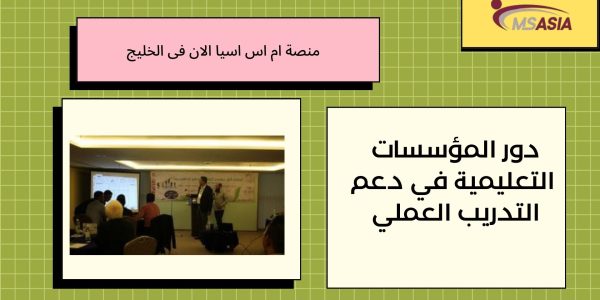
The role of educational institutions in supporting practical training
Educational institutions contribute to supporting hands-on training by partnering with the industrial sector to provide training opportunities that meet the needs of the market, and to prepare students through workshops that introduce them to the culture and ethics of work. It also provides continuous support during training by following a periodic academy and constructive evaluations, as well as updating programs based on student and corporate observations to bridge the gap between theory and practice. Some institutions adopt modern technologies such as virtual reality to enhance practical experience, and are dedicated to training accredited certificates that enhance their value in the student career..
Case Studies: Successful Practical Training Models
1. Students Success Stories Achieving Job Opportunities Through Training
- The story of Nora Mostafa Aouina (Nursing Specialization)
Nora joined the Nursing Diploma Program at Al-Asriya University College, where she combined the theoretical side with intensive practical training. The integrated educational system helped her acquire practical skills that enabled her to join the hands-on training unit at Al-Quds University after graduation. She also prompted her practical experience to continue her bachelor’s degree and her ambition towards postgraduate studies.
The main factor for success: the integration between intensive training and the academic plan that keeps pace with the requirements of the labor market.
2. The experience of the “Al-Asriya University” Foundation in integrating the trainees with real projects
The college relied on practical training programs within hospitals and health centers, where the students participated in patient care and the implementation of medical procedures under the supervision of specialists. This approach facilitated the transition of graduates to the labor market without difficulties, because they were trained to face realistic scenarios during the study period..
3. FoundationLD-XTraining young people using modern methodologies
The organization has provided training programs based on simulation of real work environments, such as the use of virtual reality and practical applications in the fields of leadership and management. This approach helped the trainees develop the required leadership and technical skills in the market, which increased the chances of their employment in reputable companies.
4. Experiment with the “case study” method in training
In one of the training courses for 21 trainees, the case study method is applied to face virtual problems in crisis management. The trainees were divided into teams to discuss solutions and make decisions under time pressure, which enhanced their teamwork and critical thinking skills. Their satisfaction with the experience reached 94%, according to evaluations.
5. The successes of the National Employment and Training Alumni
Success Stories included trainees who participated in specialized training programs in such fields as technology and logistics. After the training ended, they got job opportunities in major companies thanks to their practical skills, such as project management and technical problem solving..
Elements common to successful models:
- Integration between theory and practice: as in the case of modern university, which linked the academic curriculum to field training.
- Using innovative techniques: Virtual Reality or Interactive Case Studies.
- Ongoing support: through academic supervision and periodic performance evaluation.
- Building professional networks: by encouraging communication with experts and colleagues, which is mentioned in the strategies for benefiting from training.
These models show that practical training success is based on designing programs that meet the needs of the market, provide realistic experiences, and enhance interaction between trainees and professionals..
How do practical training support the sustainable development goals?
Practical training is a fundamental pillar of achieving the SDGs, which are developed by the United Nations, as it contributes to promoting economic, social and environmental development through a variety of mechanisms, including:
1. Promote quality education
Practical training develops practical skills that complement theoretical education, raising the quality of education and linking it to the needs of the labor market.
- Example: Training engineering students on renewable energy technologies supports a green shift-compatible education.
2. Providing decent job opportunities that qualify the trainees to integrate into the labor market by gaining experience that reduce unemployment, especially among young people (aged 15–24 years, which constitutes 13% of the world’s unemployed).
- Example: Technological sector training programs have helped African youth establish start-ups.
3. Poverty Reduction and Inequality
It enables marginalized groups (such as women or people with disabilities) to obtain skills that raise their income.
- Example: The training of rural women in India to manage small projects contributed to 20% reduction in poverty rates in some regions.
4. Industry support and innovation
Providing the industrial sectors with skilled laborers capable of adopting modern technologies, such as artificial intelligence or sustainable manufacturing.
- Example: Universities partnerships with electric car factories in Germany to train engineers on emission-free technologies.
5. Promote Gender Equality
- It enables women to enter areas that were the preserve of men (such as programming or engineering) through dedicated training.
- Example: The “Million Women in Technology” initiative in the Middle East encouraged females to train in the IT sector.
6. Preserving the environment (Goal 13) and ensuring clean energy (Goal 7)
- Training of cadres on environmentally friendly techniques (waste management or solar panel installation).
- Example: Costa Rica training programs on sustainable agriculture contributed to an increase in green spaces by 15%.
7. Strengthening Partnerships (Goal 17)
- Cooperation between governments, the private sector and educational institutions encourages the design of training programs that meet the needs of development.
- Example: “Skeels for Africa” alliance between the European Union and African countries to train 100,000 young digital skills by 2025.
#In the end, I would like to give you some tips
- Invest every moment: learn even from simple tasks, and ask for extra tasks to expand your skills.
- Build a Network Relationship: Connect with colleagues and moderators, and keep your professional connections even after the training ends.
- Write down your accomplishments: Create a file documenting your projects and feedback to use in future job interviews.
- Be curious: ask about everything that you don’t know, and learn from your mistakes instead of being afraid of them.
- Maintain flexibility: accept the sudden changes, and consider every challenge an opportunity to grow.
- Come out with positive relationships: thank the staff, and leave an impression that reminds you of excellence and professionalism.
**Remember**: Practical training is not the end of the journey, but the beginning of a career path, built by diligence.
I am glad to help you with some sources
- https://mfes.journals.ekb.eg/article_222262.html
- https://hiss.journals.ekb.eg/Article_309271.html
- https://books.google.com.eg/books?hl=ar&lr=&id=moeqdwaaqbaj&oi= fnd&pg=pa33&dq=%D8%AA%D8%AF%D8%B1%D{A%D8%A8+%D8%B9%D9%D9%85%D9%84%D9 8%A+%D8%D8%D8%D8%D9%84%D{6%86&ots=Os9BuWRtoi& ;sig=wmkx10ihlu8r6wgzb9dc-czg_gw&redir_esc=y#v=onepage&q&f=false
- http://www.jeahs.com/index.php/jeahs/article/view/615
- https://units.imamu.edu.sa/colleges/computerandinformation/academic_servi CES/Documents/Practical_Training/Practical%20Training%20Guide_Updated.pdf
- https://hrdiscussion.com/hr68511.html
- https://databrowser.uis.unesco.org/
